Two years ago, “AI in software” meant a chatbot widget bolted onto a website. In 2026, it means something much bigger — AI is changing how software gets built, what it costs, how fast it ships, and what the finished product can actually do.
The numbers tell the story. According to GitHub’s State of the Developer report, 92% of developers now use AI-powered coding tools. Roughly 41% of all code written in 2025 was AI-generated, and that share is projected to cross 50% in high-adoption organizations by late 2026. McKinsey‘s 2026 research shows companies using AI in their development process seeing productivity gains of 35 to 45%.
For business owners planning a custom software project, this raises practical questions. Does AI make development cheaper? Faster? Should your software include AI features? Is AI-generated code safe to trust? And what should you look for in a development partner in this new landscape?
This guide answers those questions honestly — what has actually changed, what is still hype, and what it means for your next project.
Quick Answer: How AI Is Changing Custom Software Development
AI is changing custom software development in two distinct ways. First, AI is transforming how software gets built — AI coding assistants now generate 40%+ of code, reducing development time by 30 to 45% and lowering project costs. Second, AI is changing what software can do — modern custom applications embed AI into their core workflows for prediction, automation, personalization, and decision support, rather than bolting on a chatbot as an afterthought. For businesses, this means faster delivery, lower costs for standard features, and new capabilities that were impractical two years ago. What has not changed: the need for experienced engineers to review AI output, make architectural decisions, and translate business needs into working systems.
Change 1: AI Is Making Development Faster and Cheaper
The most immediate impact of AI is on the development process itself. Here is what that looks like in practice.
Code generation has matured. AI coding assistants like GitHub Copilot, Cursor, and Claude do not just autocomplete lines anymore. They generate complete functions, components, API endpoints, and database schemas that follow a project’s existing patterns. Google reports that 25% of its own code is now AI-assisted. The practical effect: routine development work that took a day now takes hours.
Testing is dramatically better. Teams using AI-powered testing frameworks achieve 83% test coverage compared to 54% with traditional approaches, while cutting testing time by 56%. Production incidents have dropped by an average of 67% for organizations that fully adopted AI testing. For clients, this translates to fewer bugs after launch and less money spent on post-launch firefighting.
Documentation stays current. Documentation has always been the first casualty of fast-paced development. AI now generates and maintains documentation automatically, synchronized with code changes. Teams with AI-generated documentation onboard new developers 40% faster — which matters when your project changes hands or scales up.
Requirements get sharper before coding starts. One underappreciated change: AI-assisted analysis tools can process meeting transcripts, emails, and rough descriptions to produce structured requirement drafts that flag ambiguities and contradictions early. Misunderstood requirements are the most expensive problem in software development, and AI is helping catch them before they compound.
What this means for your budget: AI-assisted development has reduced routine coding time by 30 to 45%. That does not mean your project costs half as much — the savings concentrate in standard features, while complex business logic, architecture, and integration work still require expert human time. But it does mean an MVP that cost $60,000 two years ago might cost $40,000 to $50,000 today, and it ships faster.
Change 2: AI Is Changing What Custom Software Can Do
The second shift is bigger than the first. AI is no longer a feature you add to software — increasingly, it is the foundation you build on.
The old approach: build your software, then bolt on a chatbot. The chatbot answers basic questions and everyone calls it “AI-powered.”
The 2026 approach: design AI into the core workflows from day one. The software learns from user behavior, predicts what happens next, automates decisions, and improves continuously.
Here is what AI-native custom software actually does in real business applications:
Prediction. Software that forecasts demand, predicts customer churn, estimates delivery times based on live conditions, or flags which invoices are likely to be paid late. Instead of reporting what happened, the system tells you what is about to happen.
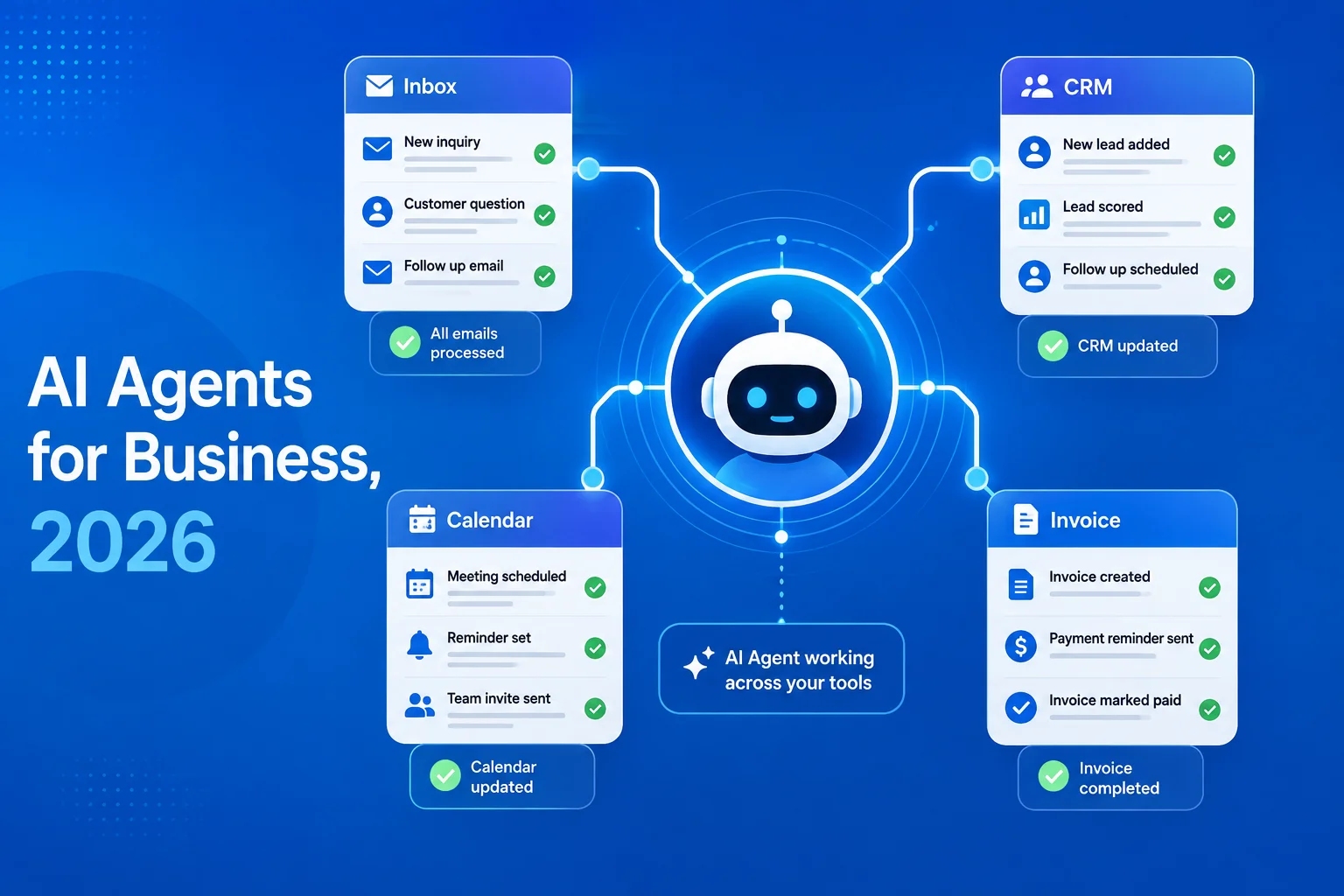
Intelligent automation. Workflows that previously required human judgment — routing support tickets by urgency, categorizing documents, matching candidates to jobs, verifying data quality — now run automatically with AI making the routine calls and escalating the ambiguous ones to humans.
Personalization. E-commerce platforms that adapt product displays to each shopper. Content systems that learn what each user engages with. Dashboards that surface the metrics each role actually needs.
Decision support. Rather than replacing human decisions, AI-native software gives decision-makers better inputs — flagging compliance risks before they become issues, recommending optimal resource allocation, and identifying patterns in data that no one would spot manually.
We see this shift in our own work at SoftwareOrbits. Platforms like Deuce Data — our tennis intelligence platform — are built around exactly this principle: real-time data processing, predictive modeling, and automated alerts that give users insight they could not assemble manually. The intelligence is not a feature on top. It is the product.
What AI Features Actually Cost
If you are considering AI capabilities in your custom software, here are realistic 2026 numbers.
Simple AI integrations ($15,000 to $40,000 added to a project). A recommendation engine, an AI-powered search, a document summarization feature, or a support chatbot built on existing models like GPT-4o or Claude. These use established APIs and patterns — proven, fast to implement, and reliable.
Mid-complexity AI systems ($40,000 to $100,000 added). Custom prediction models trained on your business data, intelligent workflow automation with human-in-the-loop review, or multi-step AI processing pipelines. These require data preparation, model selection, testing, and tuning.
Complex AI architectures ($100,000 to $300,000+). Fine-tuned models, RAG (retrieval-augmented generation) systems built on your proprietary knowledge base, multi-model systems, or AI that makes consequential automated decisions requiring extensive guardrails and monitoring.
Ongoing costs matter too. AI features have running costs that traditional features do not — API usage fees typically range from $200 to $8,000 per month depending on traffic. Budget for this from the start.
One warning from experience: retrofitting AI onto existing software often reveals data problems — inconsistent formats, missing fields, siloed databases. AI is only as good as the data feeding it. If your data foundation is weak, budget 4 to 8 weeks for a data audit and cleanup before AI development starts. Skipping this step is how AI projects fail.
What AI Has NOT Changed
The hype needs a counterweight. Here is what remains stubbornly human in 2026.
Architectural decisions. AI can generate code, but deciding how a system should be structured — what scales, what stays secure, what survives three years of growth — still requires experienced engineers. Bad architecture with AI-generated code is just bad architecture built faster.
Understanding your business. AI does not know what your business is trying to accomplish. It cannot sit in a discovery meeting, notice that two stakeholders are describing conflicting workflows, and ask the question that untangles it. The human work of translating business needs into the right product remains the hardest and most valuable part of development.
Code review and quality control. AI-generated code is not automatically good code. It can contain subtle bugs, security vulnerabilities, and unnecessary complexity — what engineers call “silent technical debt.” Every serious development team now has mandatory review processes for AI-generated code before it reaches production. The teams that skip this review are shipping problems they will pay for later.
Security accountability. AI can help detect vulnerabilities, but it can also introduce them. Static analysis tools designed to audit AI output have improved substantially, and the industry lesson is clear: speed without scrutiny is a liability, not an advantage.
The judgment about when NOT to use AI. Not every feature needs AI. Not every workflow benefits from prediction. A good development partner tells you where AI adds real value and where it is expensive decoration. Hype-driven AI decisions waste budgets.
What This Means When Choosing a Development Partner
The rise of AI changes what you should look for in a development company.
Ask how they use AI in their process. The best firms are transparent about where they use AI-assisted tooling and where they rely on human expertise. If a company claims they do not use AI at all, they are slower and more expensive than they need to be. If they claim AI does everything, they are cutting corners on review and quality.
Ask about their code review process for AI-generated code. This question separates professional teams from cowboys. A good answer includes senior engineer review, static analysis, and security auditing before AI-generated code enters production.
Ask whether they are model-agnostic. Good partners select AI models based on your use case, cost, privacy requirements, and performance — working across OpenAI, Anthropic, Google, and open-source models as the project demands. Partners locked into one vendor are optimizing for their convenience, not your outcome.
Evaluate their data expertise. AI features live or die on data quality. A partner who asks about your data architecture before proposing AI features understands how this actually works. A partner who promises AI magic without discussing your data does not.
Expect faster timelines and adjusted pricing. Development is genuinely faster now. If a company quotes 2023-era timelines and prices for standard features, they either have not adopted modern tooling or they are pocketing the efficiency gains. Fair 2026 pricing reflects AI-accelerated delivery on routine work while charging appropriately for the human expertise that still drives quality.
At SoftwareOrbits, our custom software development process integrates AI tooling throughout — code generation, testing, documentation — with senior engineer review at every stage. The result is faster delivery without the quality risks of unreviewed AI output. And when clients want AI features in their products, we start with the data audit, not the sales pitch.
Frequently Asked Questions (FAQ)
How is AI changing custom software development?
AI is changing development in two ways: the process (AI coding assistants now generate 40%+ of code, cutting development time by 30 to 45%) and the product (modern custom software embeds AI into core workflows for prediction, automation, and personalization rather than bolting on chatbots). Development is faster and cheaper for standard features, while new AI-native capabilities are practical that were not two years ago.
Does AI make custom software development cheaper?
Yes, for routine work. AI-assisted development has reduced standard feature development time by 30 to 45%, which translates to lower costs for MVPs and common functionality. Complex architecture, business logic, and integration work still require expert human time. An MVP that cost $60,000 two years ago typically costs $40,000 to $50,000 in 2026.
How much does it cost to add AI features to custom software?
Simple AI integrations (recommendation engines, chatbots, AI search) add $15,000 to $40,000 to a project. Custom prediction models and intelligent automation add $40,000 to $100,000. Complex systems with fine-tuned models or RAG architectures add $100,000 to $300,000+. Ongoing API costs run $200 to $8,000 per month depending on usage.
Is AI-generated code safe to use in production?
Only with proper review. AI-generated code can contain subtle bugs, security vulnerabilities, and unnecessary complexity. Professional development teams run mandatory senior engineer review, static analysis, and security auditing on AI-generated code before it enters production. Teams that skip this review ship problems.
Will AI replace software developers?
No. AI has changed what developers do — less routine typing, more architecture, code review, and problem-solving — but human judgment remains essential for system design, business understanding, security accountability, and quality control. Demand has shifted toward developers who can work effectively with AI tools, not away from developers entirely.
Should my business software include AI features?
Only where AI adds real value. Good use cases include prediction (demand forecasting, churn risk), intelligent automation (document processing, ticket routing), personalization, and decision support. Bad use cases are AI added for marketing appeal without a clear workflow benefit. A good development partner will tell you honestly where AI helps and where it is expensive decoration.
What should I look for in a development partner in the AI era?
Transparency about how they use AI in their process, a mandatory review process for AI-generated code, model-agnostic AI expertise (not locked to one vendor), data architecture expertise, and pricing that reflects AI-accelerated timelines. Avoid partners who either reject AI tooling entirely or claim AI does everything.
What is AI-native software?
AI-native software is designed with intelligence embedded into core workflows from day one — learning from data continuously, automating decisions, and adapting in real time — rather than having AI features added afterward. Examples include platforms that predict demand, flag risks automatically, personalize experiences, and surface insights without manual analysis.
Conclusion
AI has genuinely changed custom software development — not in the “developers are obsolete” way the hype predicted, but in ways that matter practically for anyone commissioning software in 2026. Development is faster. Standard features cost less. Testing is more thorough. And the software itself can now do things — predict, automate, personalize, advise — that were impractical for mid-size budgets two years ago.
What has not changed is the importance of judgment. AI amplifies whatever process it is plugged into. A disciplined team with strong review practices ships better software faster. A careless team ships bugs faster. The technology is not the differentiator — the team using it is.
If you are planning a custom software project and want a partner who uses AI where it helps and human expertise where it matters, SoftwareOrbits can help. Our custom software development team builds AI-accelerated and AI-native platforms across fintech, logistics, staffing, and sports analytics. Reach out for a free consultation and we will give you an honest assessment of what AI can — and cannot — do for your project.